
On Worldmaking (Part Two)
A Transformational, Creative, Communal Practice

Earlier this spring, I had the privilege of curating and leading Worldmaking as Creative Practice—a two-day invitational gathering co-presented with the Creative Communities Commons at the University of Toronto’s School of Cities. As Artist-Research-in-Residence, I have been enjoying this institutional home as a place to further my inquiry on collective embodied practices and their contributions to social health, relational leadership, and democracy.
This is Part Two of a two-article series. If you missed it, go here for Part One.
____________________________________________________________________________
From May 29-30, I and a group of 50+ artists, community organizers, scholars, researchers, funders, consultants, institutional leaders, graduate students and activists explored worldmaking as creative practice. To do this, we engaged in interactive workshops, collaborative exchanges and embodied encounters that helped surface insight beyond words—through the body, through shared attention, through relational practice. By treating creative practice as a form of worldmaking, this convening brought to life the ways in which artistic strategies can effectively cultivate new forms of collaboration, reimagine shared spaces, and generate meaningful social change.
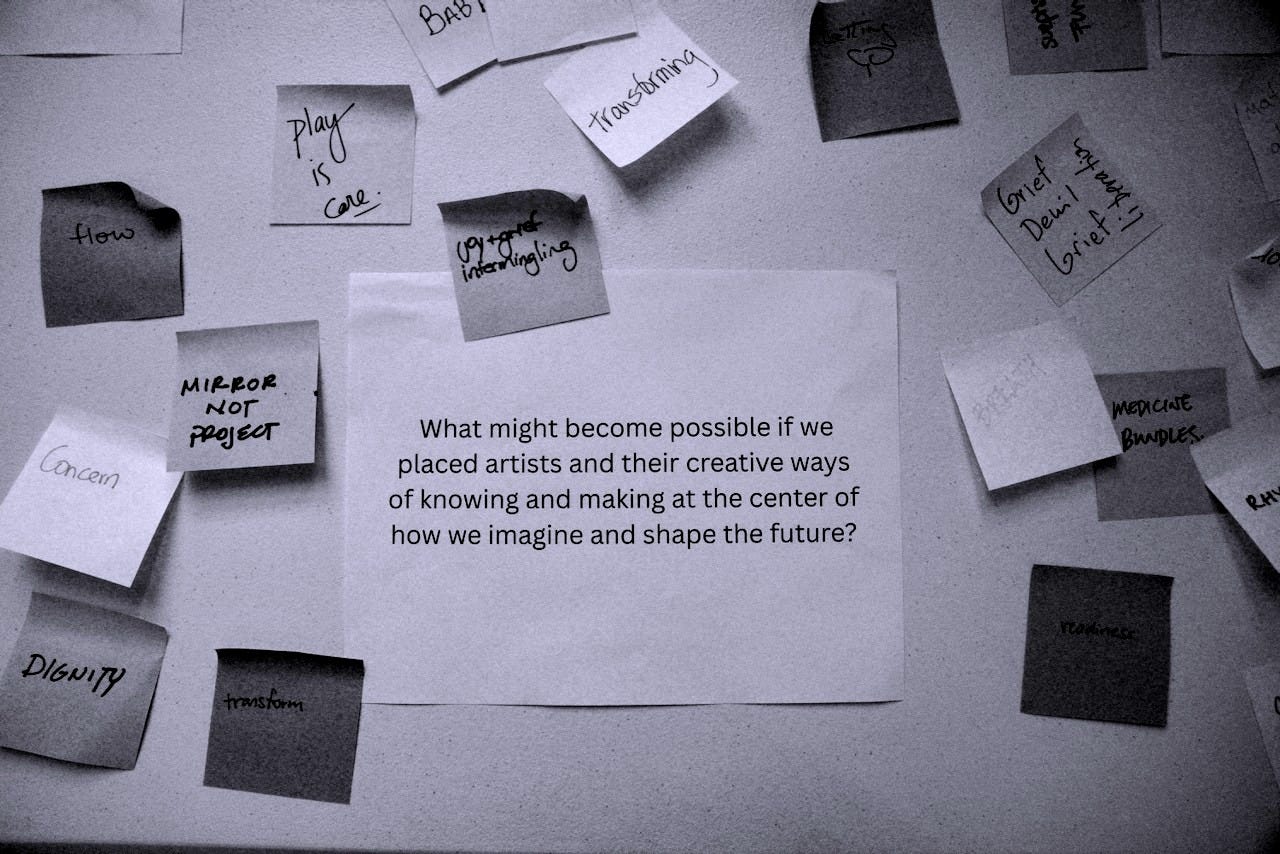
Here’s what happened:
Day One: The Art of Civic Leadership
Held at the Young Centre for the Performing Arts in the Distillery District in partnership with Soulpepper Theatre, Day One explored worldmaking across civic, relational, and ecological domains. We began with an invitation to reimagine art’s role in shaping life, followed by sessions on civically-engaged cultural stewardship, embodied leadership, ecological reciprocity, and artistic intelligence. From story circles to guided movement in the more-than-human world, the day culminated in an open exchange on how creativity can reshape systems and deepen our collective capacity to imagine otherwise.
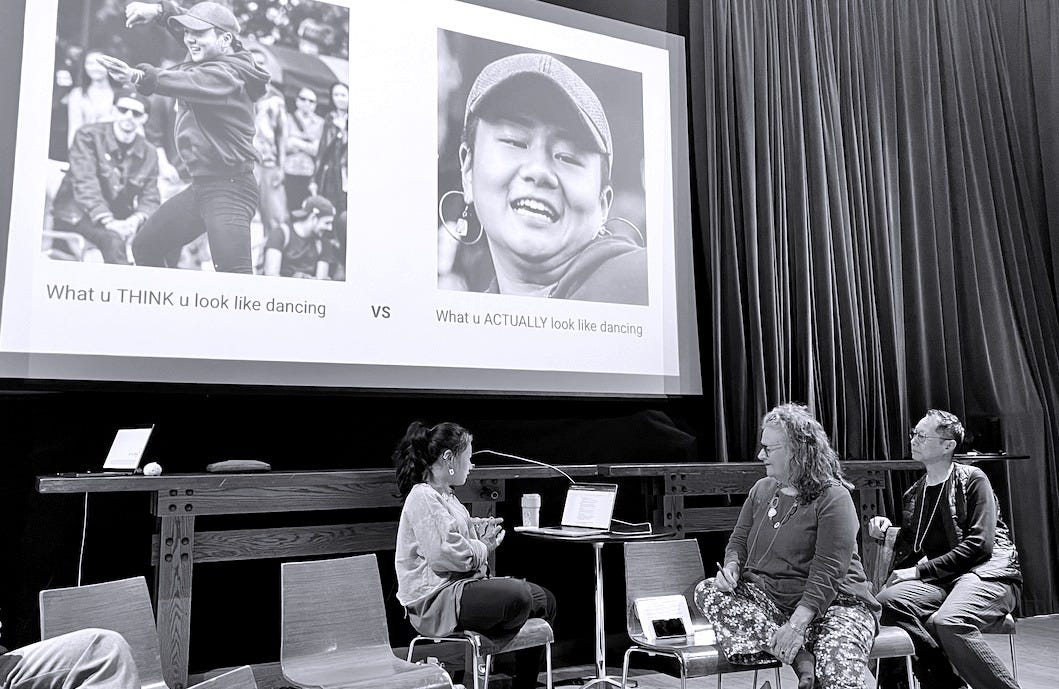
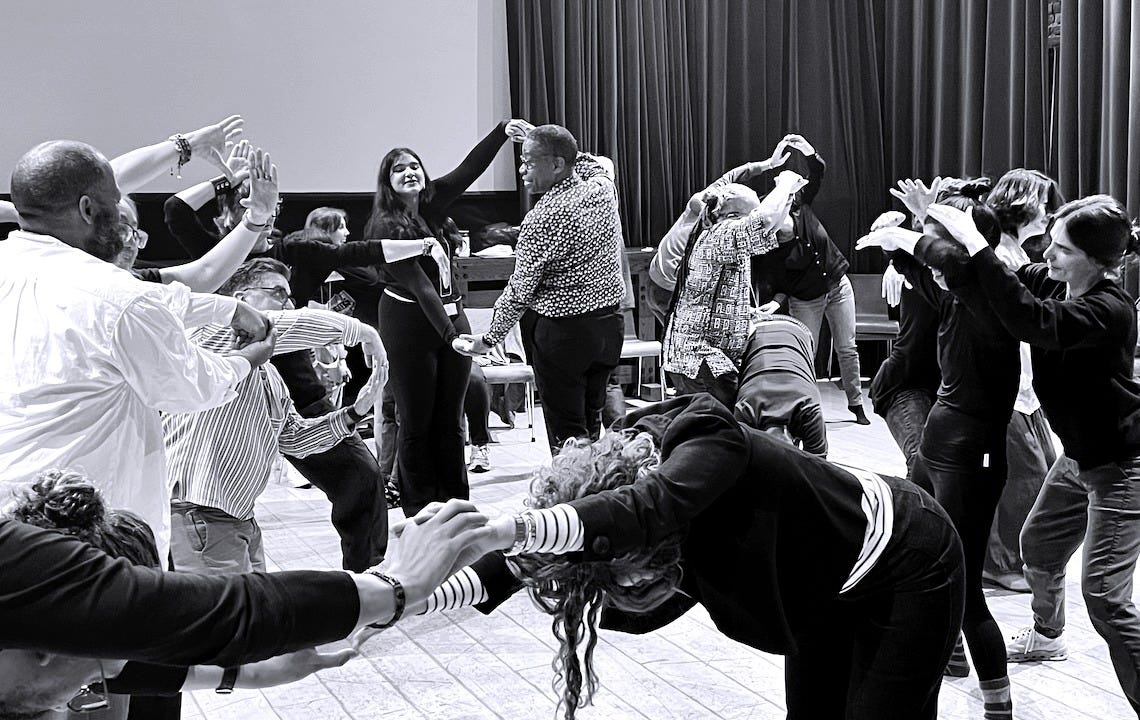
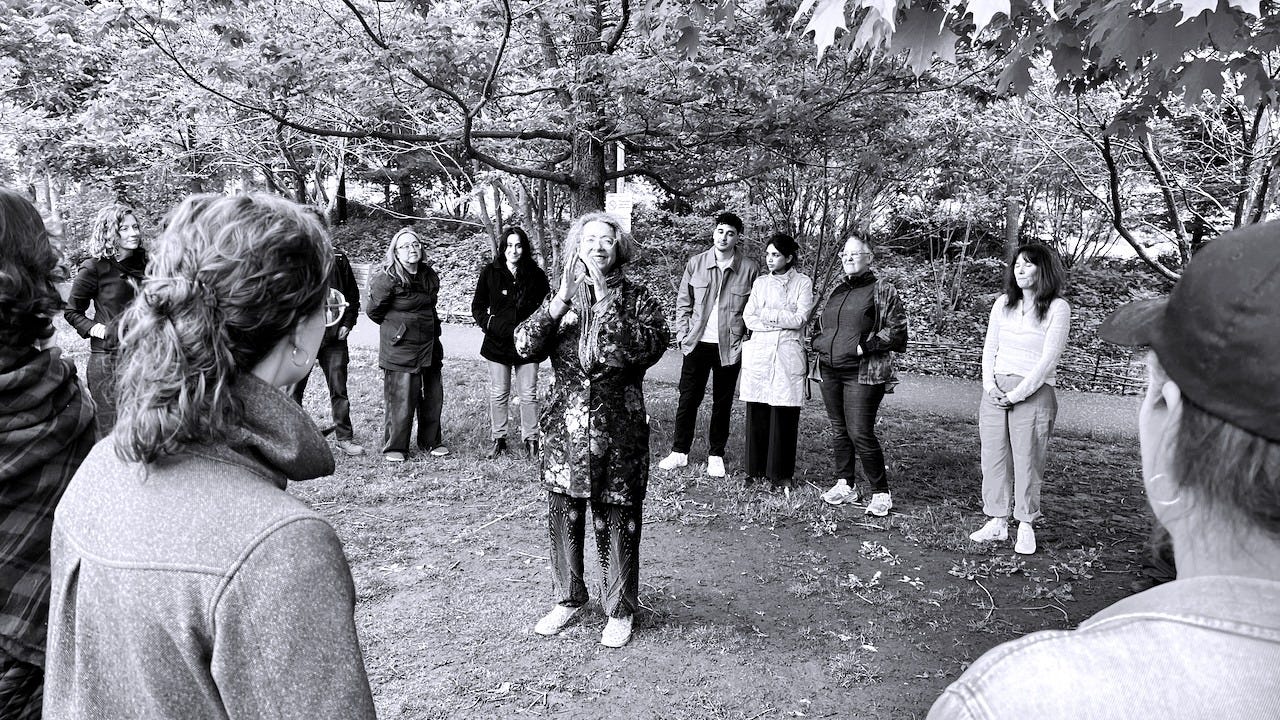
See the full Day One Program here.
Day Two: The Art of Collective Care and Social Health
Hosted at Currie Hall in partnership with Canada’s National Ballet School, the second day focused on care and healing through expressive, embodied practice. We were invited to consider worldmkaing as a practice of healing, care and restoration. We began with Vital Signs, an experiential exploration of embodied health led by Sweet Labour Art Collective, followed by and expressive arts therapy session with Victoria Mata. Through image-making and poetry, we experienced the ways in which artistic expression supports personal and collective health. We reflected on how creativity not only expresses the world we live in, but also helps us repair it and imagine it anew.
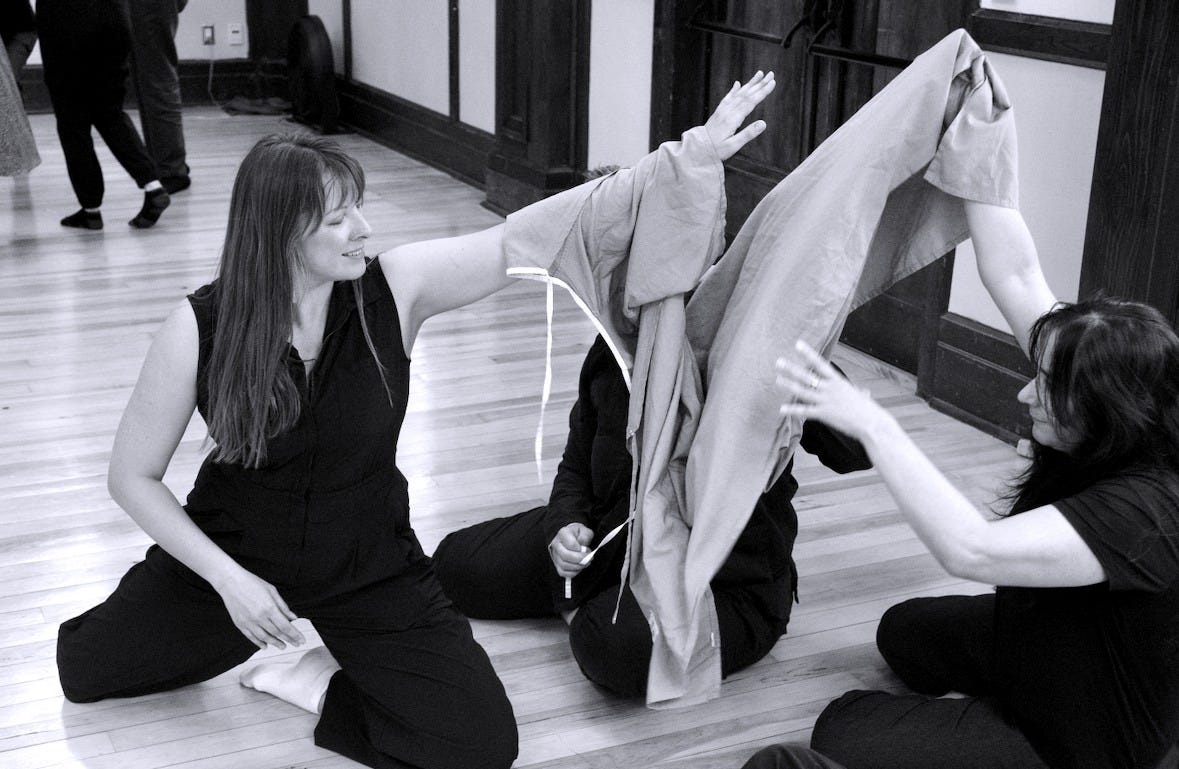
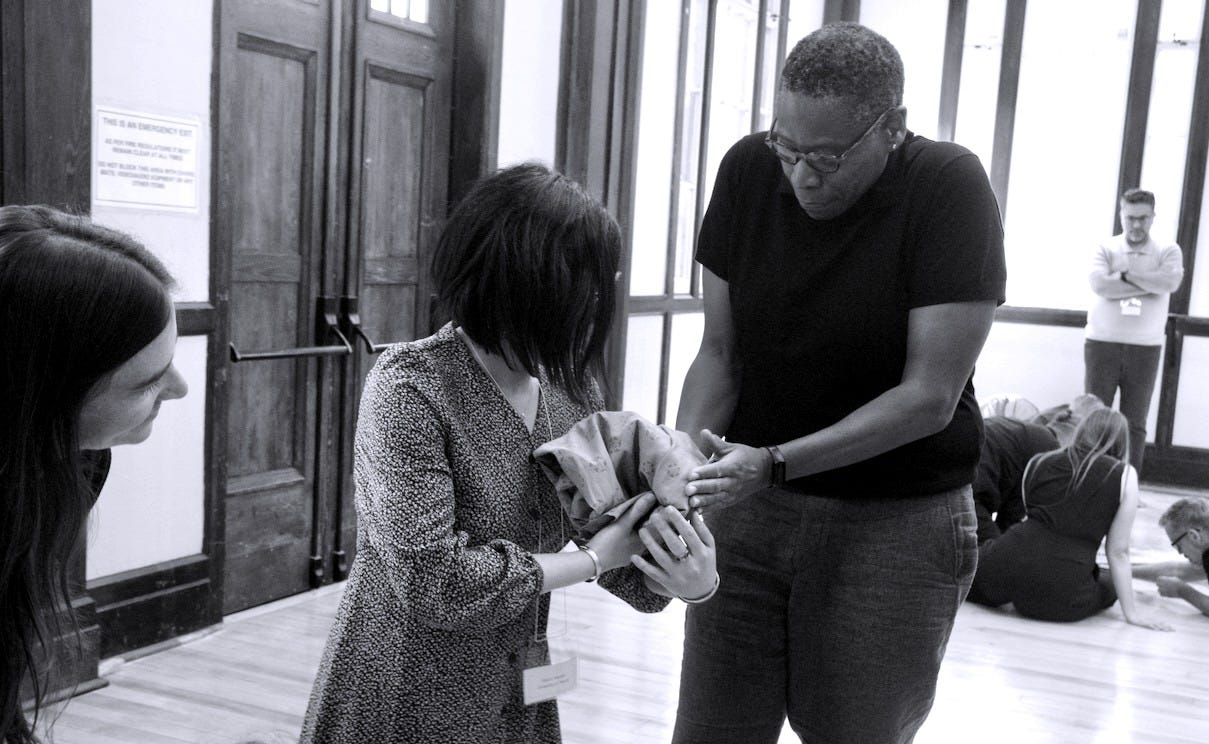
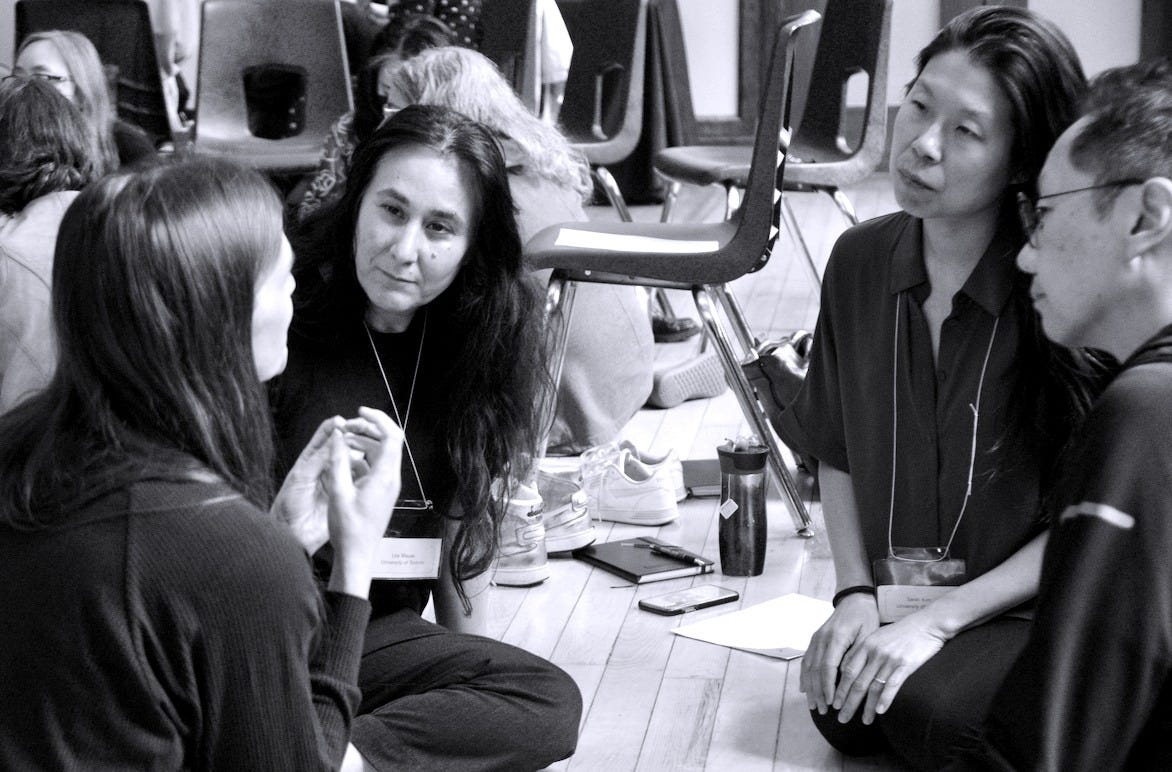
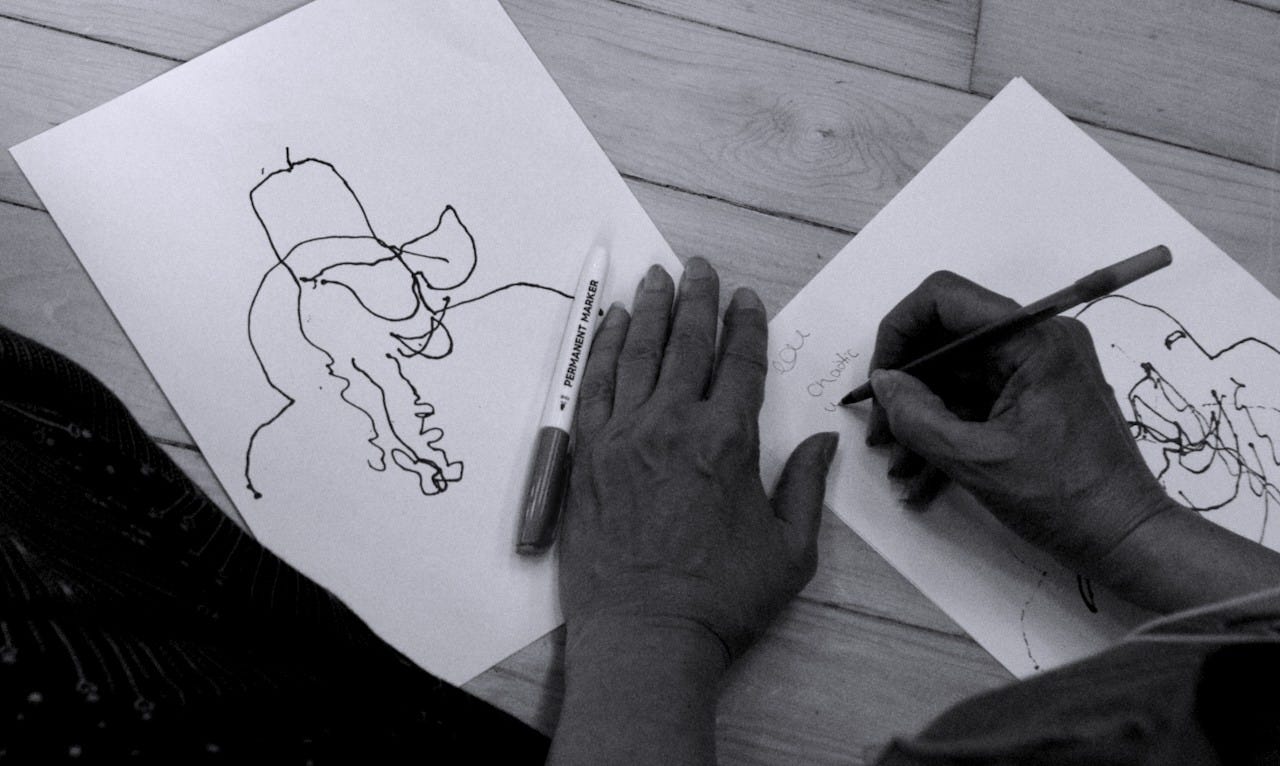
See the full Day Two Program here.
Reflecting on the Gathering
Across the two days, what emerged most powerfully for me was the quality of being we cultivated together. In every circle, movement, story, and exchange, we witnessed how building community across perceived divides can open us to new possibilities. It turns out that what we explore matters as much as how we come together—how we relate, make space, and co-create a shared sense of home, even if only for a day and a half. Making ourselves at home together shaped a collective imagination of home - of a world - where we could all belong.
Throughout our explorations we were reminded that belonging is not a given, but a co-created process made over and over. Through process, our values were enacted: in how we extended hospitality, navigated discomfort, and invited each other into our full humanity beyond professional roles or performative representations. We wondered about how to transgress the expected norms and conventions that accompany professional roles and titles in order to make way for new possibilities.
We embraced not-knowing as fertile ground and we allowed presence to take precedence over answers. We leaned into the rhythms of collective movement, rhythm, and laughter—ancient technologies that remind us how to be in relationship with one another and the world. Trees were our kin and counsel. Breathing together became a revitalizing ritual. We gathered in seriousness and in play. Together, we rehearsed new ways of centring connection, creativity, and care. And in doing so, we affirmed that participating in shared creative practice is not only a way of making things but a way of making shared sense of things.
Here’s what some of the attendees had to say:
"Worldmaking as creative practice allows for ideas, teams, and initiatives to become unstuck. While entering the frame may at first seem only aspirational, this way of thinking and working is instead fundamentally practical. This is the way that artists make the impossible into possible and when your organization or initiative is up against the impossible, it is a way forward."
-Michael Murray, CEO, Ontario Arts Council
“I’ve always felt that the difference between ideas and worldmaking lies in where and how they take shape. An idea is a collection of fragments stitched together in a single mind personal, imaginative, and often solitary. Worldmaking happens when those fragments meet others — when ideas converge across people, perspectives, and experiences to create something shared, lived, and expansive. The workshop reminded me that we are the ideas we carry and that building begins with the connections we make between them.”
-Robin Sokoloski, Executive Director, MASS Culture
“It was a unique experience of sharing and creating knowledge, experience, with a diverse and unique group of people from different age, and background, that thanks to an extraordinary planning allow a temporary world to be made.”
- Diego Rotman, Visiting Scholar, University of Toronto
”This gathering helped create a new normal in how to be together and how to learn from each other. How we inspire our collective embodied imaginations opens up whole new ways of seeing and making our world. We are desperate for new forms that welcome the ignored yet always available wisdom of our bodies, nature, and the creative practices of belonging.”
- Marcus Young, Behavioural Artist, St. Paul’s, Minnesota
“Such beautiful glimmers of what can happen through the alchemy of curation, affordances, resistance, and remembering - the ingrdients for social cohesion hidden in the glorious absurdity of creative practice!”
- Georgia Simms, Artist and PhD Candidate, University of Guelph
Our time together revealed how art can serve not only as a means of expression but also as a method of inquiry, a tool of repair, and a practice of becoming. It affirmed that worldmaking is always inherent and in progress. It is not the work of the individual alone, but something we do together—in community, in motion, and in relation.
As we dispersed back into our respective contexts—our communities, institutions, disciplines, and lives—we carried with us the traces of this temporary world we made together. What we practiced in those two days was not just a gathering, but a glimpse of a future already in motion: one in which creativity is infrastructure, care is culture, and the arts are essential technologies of transformation. The invitation now is to keep practicing—to keep tending the fragile, luminous threads of connection and imagination that make other worlds possible.
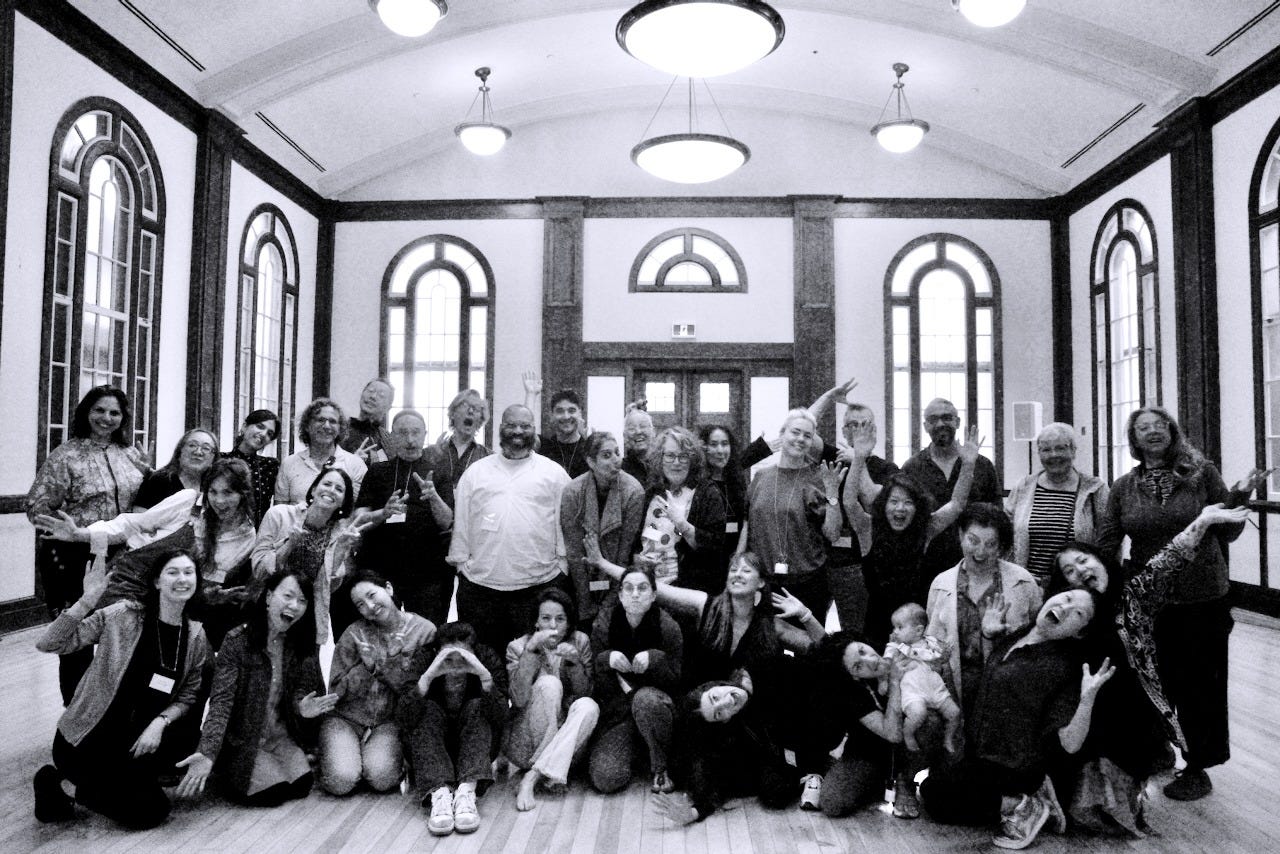
Thank you to the amazing group of people who participated:
Aderonke Akande, City of Toronto
Aimée Ippersiel, Siminovitch Foundation
Aubrey Reeves, Business / Arts
Ayanna Kahlon, University of Toronto’s School of Cities
Camila Justino, University of Toronto
Carmen Osahor, University of Toronto
Claude Schryer, Conscient Podcast
Dan Silver, University of Toronto
David Barnard, Department of Canadian Heritage
Diane Kim, University of Toronto
Diego Rotman, University of Toronto
Georgia Simms, University of Guelph
Hannia Cheng, Chinatown Land Trust
Helen Yung, Laboratory of Artistic Intelligence
Jamie Bennett, University of Toronto’s School of Cities
Jane Marsland, Consultant
Jialiang Zhu, University of Toronto
John Dalrymple, Canada’s National Ballet School
Julia Aplin, Wild Soma
Kenneth Bailey, Design Studio 4 Social Innovation
Laura Menard, University of Toronto
Lea Mauas, Visiting Scholar, University of Toronto
Lo Bil, Artist
Mairead Filgate, PlaySpace
Marco Adamovic, University of Toronto
Marcus Young, City of St. Paul, Minnesota
Mark Campbell, Laboratory of Artistic Intelligence / University of Toronto
MaryElizabeth (M.E.) Luka, University of Toronto
Michael Murray, Ontario Arts Council
Michael Trent, Metcalf Foundation
Michelle Nadon Belanger, Creative Communities Commons
Miranda Wu, University of Toronto
Nasim Niknafs, University of Toronto
Pablo Vasquez Segura, University of Toronto
Patti Pon, Calgary Arts Development Agency, OCADU
Rebecca Carbin, Art+Public
Robin Sokoloski, MASS Culture
Roula Said, Wild Soma
Rohan Kulkarni, Soulpepper
Ruth Douthwright, Sweet Labour Arts Collective
Sarah Kim, Sweet Labour Arts Collective / University of Toronto
Sarah Smith, University of Toronto’s School of Cities
Seema Jethalal, Extra Cardamom Consulting
Silvano De la Lata, Concordia University
Sophiya Khan, University of Toronto
Susie Burpee, Artist / Balancing Act
Syrus Marcus-Ware, McMaster University
Victoria Mata, Artist, Expressive Arts Therapist
Zahra Ebrahim, Monumental / University of Toronto
Zemina Meghji, Laboratory of Artistic Intelligence